
What changes when you choose DAP delivery
DAP delivery changes where the seller’s transport commitment ends, but it does not remove the buyer’s import and receiving work. Under DAP Incoterms 2020, goods are delivered at the agreed destination on the arriving means of transport, ready for unloading. The buyer must plan import clearance and the related duties and taxes, as well as receiving arrangements. For a China shipment, the practical questions begin before dispatch: who clears the goods, which documents are ready, where the vehicle must arrive and who can unload it safely. This guide follows that operational sequence so purchasing, customs and warehouse teams can prepare one consistent plan.

Define the DAP delivery point before the shipment moves
Write the destination as a precise receiving point. Include the address and, where relevant, the building, gate or terminal point that the parties agree to use. A country or city name alone leaves too much room for incompatible expectations. Ask the seller to confirm that its transport arrangement reaches that same point.
The ICC’s DAP explanatory notes distinguish arrival ready for unloading from delivery after unloading. Map that distinction to the actual facility. If the buyer expects goods placed inside a building, describe the additional operation and obtain agreement rather than assuming it follows automatically from DAP.
Keep the receiving contact actionable
Record a person who can answer the carrier, the contact method, operating hours and any appointment process. Check whether the address accepts the proposed vehicle type and package size. Relay access restrictions before the booking is finalized, not after a driver reaches the gate.
The receiving address and the importer may be different entities. A third-party warehouse can receive goods without becoming the buyer’s customs representative. Document each role so an address book shortcut does not turn into a mistaken clearance instruction.
If the commercial decision between duty-paid and buyer-cleared delivery is still open, use our DDP and DAP replenishment comparison first. Once DAP is selected, convert that decision into the named place, clearance contacts and receiving instructions. Keep the accepted sales wording and freight scope available to the people implementing the movement.
Assign buyer-side import clearance and duty payment
Name the party responsible for the buyer’s import process before dispatch. Confirm the proposed importer and its customs representative, the information they need and who may authorize declarations or respond to queries. A seller arranging international carriage does not automatically perform the buyer’s DAP import obligations.
The ICC Academy’s DAP and DDP explanation identifies import clearance and the related duties and taxes as buyer-side responsibilities under DAP. Ask the responsible local adviser how that allocation works for the actual destination, product and transaction. Do not substitute a generic tariff estimate for that review.
Prepare a payment and response route
Identify who receives assessment or payment requests and who can approve them. Finance should understand the expected process before the goods arrive. If a query comes during a holiday or outside the buyer’s normal working hours, the team needs a named escalation contact rather than an unanswered shared inbox.
Ask what evidence the business should retain after clearance. The purchase file, customs records and freight invoices may serve different purposes. Have the qualified accounting or customs adviser confirm the records needed for the company’s situation; avoid making assumptions about tax treatment from the delivery term alone.
Keep current product facts available to the filing party. If the model, materials or packing change, send the revision before it becomes a declaration error. Our customs and risk services overview can help identify coordination topics, with the actual filing role and destination-specific work agreed separately. A clear response process supports the shipment while preserving the proper responsibilities of each participant.
Prepare documents and release instructions before arrival
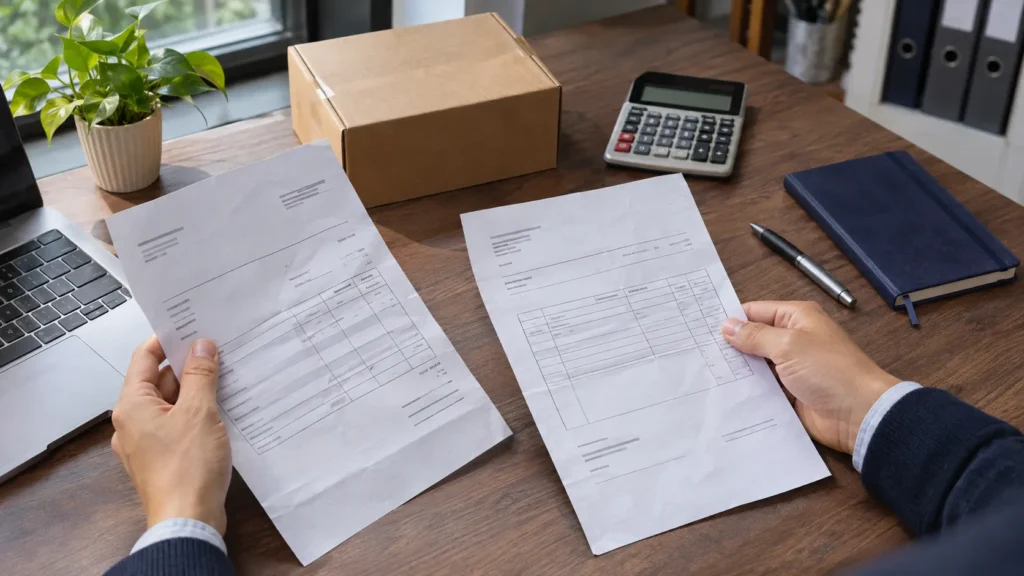
Give the customs contact enough time to review the actual goods and transaction. Supply the invoice, packing information, product details and transport references through the agreed channel. Ask for a list of missing items and assign each one an owner. Sending an attachment is not the same as receiving approval that the shipment is ready for filing.
The ITA overview of common trade documents explains why a packing list and commercial invoice have different purposes. Use that general distinction, then confirm the destination requirements. United States export filing details on that page are not China export instructions.
Synchronize document versions
If repacking changes package totals, verify which transport instructions and supporting records must be revised. Keep item descriptions and transaction references consistent. Avoid asking the receiving warehouse to reconcile several apparently final packing lists after the cargo arrives.
Our first-time import documentation checklist provides a practical approval workflow. For a DAP movement, add the buyer’s clearance contact and the person responsible for cargo release to that shared shipment record.
Check the transport-document and release arrangement with the issuer or agent. Record what the destination needs, who supplies it and which step confirms release. Do not assume that possessing a PDF proves the goods can be collected or delivered. Keep any commercial payment conditions coordinated with the parties who control release.
Before arrival, confirm that the relevant participants have the final reference, current arrival information and an escalation contact. If a required document remains outstanding, ask how the transport and receiving plan should be adjusted. A precise exception notice is more useful than a last-minute request to “clear urgently” without the information needed to do so.
Prepare the receiving site and unloading operation
Ask the receiving team to confirm its facilities before accepting the proposed delivery arrangement. Check gate access, approach restrictions, opening hours, appointment rules and the actual unloading equipment. State whether a loading dock, forklift or another agreed facility will be available for the package dimensions and weight.
| Receiving issue | Check with the buyer’s site | Communicate to the transport contact |
|---|---|---|
| Vehicle access | Height, road or vehicle restrictions | Permitted approach and vehicle requirements |
| Appointment | Receiving window and booking process | Reference, time and arrival contact |
| Unloading | Suitable equipment and trained personnel | Agreed handling scope and any special request |
| Package acceptance | Pallet dimensions and receiving limits | Final packing and identifying references |
| Exceptions | Who can authorize a changed plan | Escalation contact and approval limits |
Distinguish transport arrival from warehouse services
The ICC overview of Incoterms 2020 explains the DAP/DPU unloading distinction. If unloading or placement services are needed beyond the agreed arrangement, describe them explicitly and confirm the commercial and operational terms before dispatch.
Do not assume a driver can perform an unplanned manual unload or enter a restricted facility. Give accurate package information to the people planning the equipment and work. If the receiving site cannot handle the goods, review alternatives with the seller and carrier before the movement proceeds.
Keep the final instruction readable. A concise receiving brief with the address, contact, appointment, equipment and access conditions is easier to use than a long email chain. Ask the receiving contact to confirm it so the driver and warehouse are acting on the same plan.
Understand DAP risk and check cargo insurance separately
Identify the contractual delivery point and the evidence that will record arrival there. Keep that event separate from an estimated arrival update or a carrier tracking milestone at an earlier terminal. Ask the seller and receiving team to use consistent shipment references when documenting the actual handover.
The usual DAP arrival allocation has important buyer-default exceptions. Failure to perform import obligations or give required notices can affect risk and additional costs under the rules. Do not assume that every event before the warehouse appointment remains the seller’s responsibility regardless of the buyer’s actions. Review an actual dispute against the contract and rules with an appropriate adviser.
Do not infer insurance from the term
DAP does not itself oblige the seller to buy cargo insurance. If cover is arranged, request actual evidence and ask the provider to explain insured goods, parties, transit limits, exclusions and claims handling. A carrier’s liability regime and a cargo policy are different matters; a booking confirmation alone does not establish the cover requested.
For comparison, our CIP guide to carriage, insurance and risk explains why paying transport to a destination can coexist with an earlier risk transfer. Do not carry a CIP handover assumption into a DAP contract, or vice versa.
Record who receives loss or damage notices and how evidence is preserved. If a problem occurs, notify the relevant parties promptly using the applicable contractual and policy process. Do not invent a universal claims deadline. Confirm the real time limits with the carrier, seller and insurer rather than waiting for a routine monthly shipment review.
Identify conditional charges and manage delays
Create an exception procedure before arrival. Ask what could trigger storage, waiting, a revised appointment or other additional work, how the charge is calculated and who can authorize the action. Keep the trigger and the approval separate: receiving a message about a delay should not automatically authorize every proposed service.
Find the cause before allocating a cost
A delay might involve missing buyer information, a seller document correction, a customs examination or a receiving problem. Record what happened, when the relevant party was notified and which options were available. The word DAP alone cannot resolve every disputed invoice without the contract and facts.
Ask the provider to identify applicable free periods or relevant deadlines for the actual movement. Do not rely on a general internet allowance or on what a different carrier offered previously. Share the confirmed deadlines with the person who can approve clearance payments and with the receiving team.
Use an escalation message with four parts: current status, missing action, consequence if unresolved and decision required. Include the shipment reference and the person responsible for the next response. This lets the business compare an extra handling option with the practical effect of waiting.
Keep forecasts honest. If customs has not released the cargo, distinguish a provisional delivery appointment from a confirmed one. Update the receiving team when the underlying assumption changes. A convenient appointment that cannot be met can create another failed movement.
After resolving the event, reconcile any additional charge with its evidence and the agreed scope. Record the approved amount and explanation in the shipment file. This supports a fair discussion and gives the next shipment a more useful planning record than an unexplained total on a freight invoice.
Inspect arrival condition and record receipt
Prepare a receiving record that identifies the shipment, arrival time, package count and visible condition. Ask the receiving team how it records discrepancies and who is authorized to sign. Make sure the reference connects the receipt with the invoice, packing list and transport record.
Check visible condition before closing the record
Where safe and practicable, inspect accessible packaging and note obvious damage or shortages accurately. Photograph relevant package references and visible issues, and preserve supporting records. Do not write that every package was inspected if the team only saw the outside of a wrapped pallet.
If an exception is found, contact the appropriate seller, carrier and insurance contact through the agreed process. Record facts without guessing the cause or conceding responsibility on behalf of another party. Preserve packaging or other evidence where the applicable claims process requires it, and obtain instructions before disposing of material evidence.
Signing for physical receipt does not necessarily settle product conformity, commercial acceptance or every later claim. Those questions depend on the purchase agreement, transport terms and applicable law. Ask the relevant adviser how to record qualifications and follow-up rather than assuming a generic receipt wording resolves them.
Keep unloading and subsequent warehouse handling identifiable. Record when the receiving operation starts, who performs it and any event observed. This supports a clear factual sequence if the parties later need to discuss where damage occurred.
Finish by reconciling the received quantities with the purchase order and the warehouse stock record. A transport status marked delivered is useful, but it does not complete inventory booking or quality acceptance. Notify the buyer’s purchasing contact of discrepancies through the company’s normal approval process.

Use a DAP handover checklist for the next shipment
Turn the arrangement into a short operational checklist. The people who prepare the import entry and unload the vehicle should be able to use it without reconstructing the purchasing discussion. Keep the agreed sales wording and transport scope attached to the same shipment reference.
- Record the precise DAP named place and edition.
- Confirm the importer, broker and approval contact.
- Approve consistent transaction and packing documents.
- Confirm cargo release instructions and arrival references.
- Arrange duty payment and responses to customs queries.
- Confirm access, appointment and unloading readiness.
- Agree how exceptions and additional work are authorized.
- Record arrival condition, receipt and follow-up actions.
Example: a warehouse cannot accept the planned vehicle
In a hypothetical DAP shipment, the buyer discovers shortly before arrival that its site has a vehicle restriction. The practical response is to notify the seller and transport contact, identify permitted alternatives and approve any revised arrangement in writing. Do not tell the driver to improvise an unload at an unagreed roadside location.
Ask whether the change affects the named delivery point, handling scope, timing or costs. Update the customs and receiving contacts where needed. The example illustrates the value of early information; it does not establish liability for every access dispute.
For a future purchase using buyer-arranged ocean transport, consult our FOB shipping checklist separately. Changing the sales rule changes the planning questions, so the DAP receiving checklist should not be reused without reviewing the handover and transport responsibilities.
After the shipment, keep the confirmed contacts and lessons learned while rechecking details that can change. A clear process makes later shipments easier to coordinate without treating the previous order as proof that all future documents, rates or destination requirements will be identical.
Related sourcing and order support
 Purchase Order Follow-Up
Purchase order follow-up in China for supplier updates, specification changes, sample approvals, production readiness and cargo handover coordination.
View the product ↗
 Multi-Supplier Consolidation
Multi-supplier consolidation in China for receiving lists, supplier cargo records, sorting, repacking coordination and a defined combined-shipment handover.
View the product ↗
 Sourcing-to-Delivery Solution
A sourcing-to-delivery solution from China connecting product briefs, supplier follow-up, sample approvals, consolidation and international freight preparation.
View the product ↗
Related shipping solutions
 Importers & Wholesalers
Connect supplier readiness, multi-supplier consolidation and freight around wholesale orders and replenishment plans.
Explore solutions ↗
 Manufacturers & Trading Companies
Plan collection and transport around production milestones, export orders and customer delivery requirements.
Explore solutions ↗
 SMEs & First-Time Importers
Prepare a clearer cargo brief and compare transport and delivery choices before a first or smaller business shipment.
Explore solutions ↗
DAP delivery FAQs
Who pays the import duty on a DAP shipment?
As a rule the buyer is responsible for import clearance, duties and taxes. Confirm this in the quotation so it is not left to interpretation.
Does DAP delivery include unloading at the buyer’s warehouse?
DAP delivery occurs with goods at the agreed destination on the arriving means of transport, ready for unloading. The buyer normally handles unloading. If a transport contract includes certain unloading costs, examine that arrangement separately from unloading risk. State any equipment, placement or special handling requirement explicitly before booking rather than assuming it is included.
Can DAP be used when the receiving warehouse is not the importer?
The receiving location and importer can have different roles, but the actual arrangement must be clearly documented and suitable for the destination. Identify the importer, broker, receiving operator and authorized contacts. Do not assume that a warehouse accepting the cargo also accepts customs, tax or commercial responsibilities for the purchase.
Does the seller bear every risk until arrival under DAP?
DAP generally places delivery and risk transfer at the agreed destination ready for unloading, but the rules contain exceptions involving buyer failures, including import obligations and notices. Review the actual event against the contract and applicable rules. Preserve evidence and seek qualified advice for a dispute rather than allocating every delay or loss from the DAP label alone.
What should I do if goods arrive damaged under a DAP shipment?
Record the shipment reference, visible condition, package count and relevant photographs where safe. Notify the seller, carrier and any insurer promptly through the applicable process, and preserve the evidence required for review. Confirm actual notice and claims deadlines with those parties. Avoid guessing the cause or treating a tracking status as a complete receiving report.
Conclusion: prepare for the DAP handover
A workable DAP delivery plan joins seller-arranged transport with buyer-ready clearance and receiving. Confirm the named point, prepare documents, arrange payment responses and verify unloading facilities before the goods leave China. Keep exceptions and arrival evidence traceable to the same shipment.
Give VG Shipping the supplier location, cargo details, precise destination, broker contact and receiving restrictions. Discuss your DAP shipment requirements to define the freight coordination and practical preparation your movement needs.
General planning guidance reviewed on October 26, 2026. The contract, applicable rules and current destination requirements govern actual obligations. Seek qualified advice on disputes. Images are AI-generated illustrative business scenes.
Related shipping guides from our blog

How to compare DDP and DAP for small replenishment orders
For small replenishment orders, compare DDP vs DAP using the same cargo, receiving address and required receipt date.…
↗
How to prepare documentation for first-time imports from China
A China import document checklist starts with a commercial invoice, a packing list based on final cargo, and…
↗
CIP Incoterms for China Imports: Costs, Risk and Cover
CIP Incoterms can combine seller-arranged freight and cargo insurance in a China purchase. The detail buyers often miss…
↗
FOB Shipping from China: Costs, Risks and Buyer Checklist
FOB shipping can give an importer control over the main sea-freight booking, but an FOB price is not…
↗